
A spaceship game should respond when you press the button. That is hardly a radical demand, unless somebody has put a blockchain between your thumb and the spaceship. Then suddenly everybody is giving a speech about finality.
A good app has to manage several clocks at once. Vara Network gives builders message-driven programs and ways to reduce wallet interruptions. The related Vara.eth platform tackles responsive computation for Ethereum-connected apps. Their mechanics differ, but the player’s question is the same: did my move happen?
What “fast” can mean
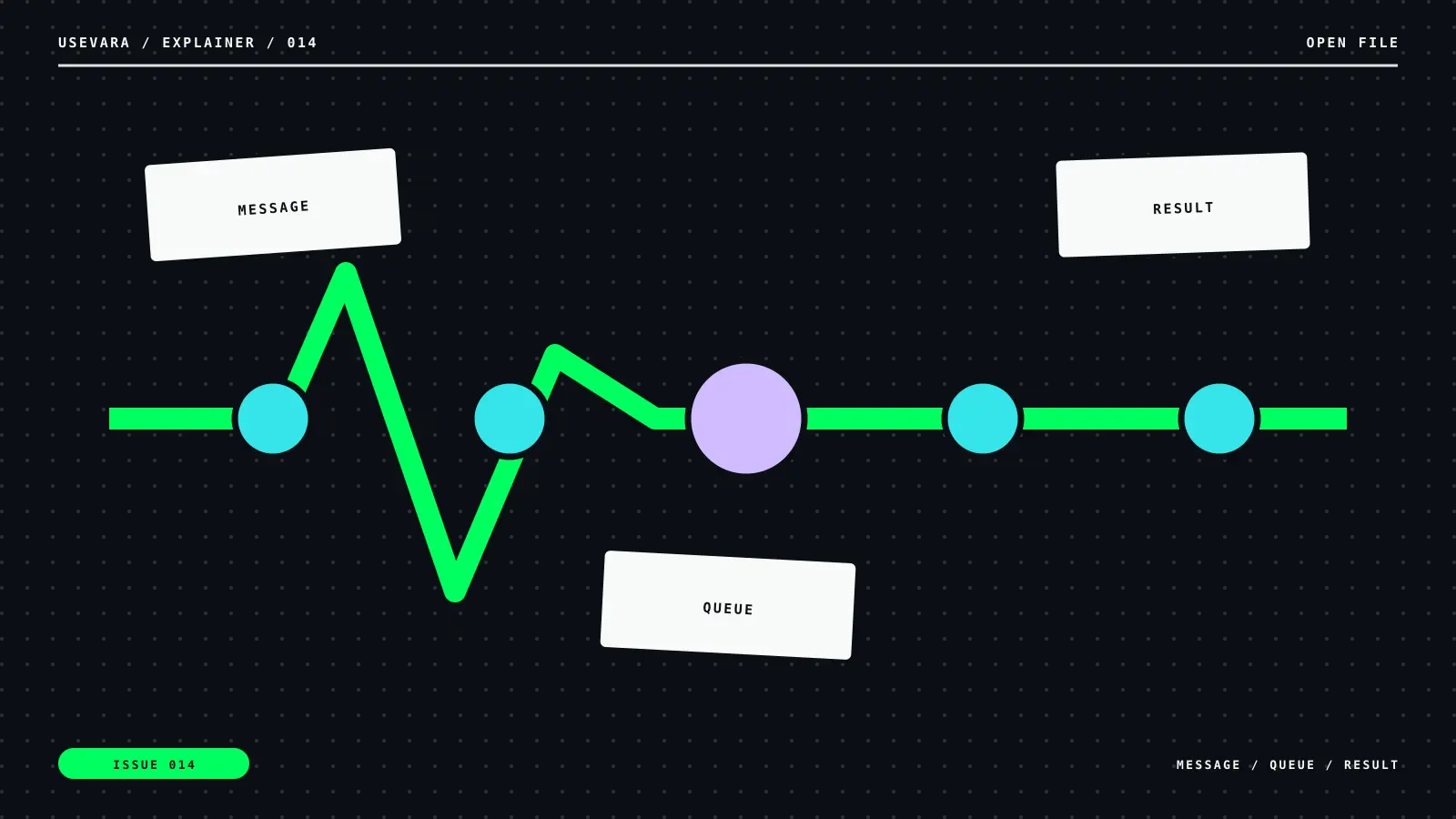
There are four useful clocks. Feedback: how long until the screen responds? Execution: when does the program process the move? Finality: when is the result settled on its network? External recognition: if another system such as Ethereum needs the result, when does it see it? A single “fast” number cannot answer all four.
An interface can show immediate feedback while the underlying operation continues. A program can process work quickly but still depend on another program or network. A game can animate a move immediately, then show when the result is confirmed. A payment app should be clearer still about what is pending and what can change.
What the machinery contributes
On Vara Network, programs are independent actors that send messages and retain state. Independent work can proceed without pretending that everything is one long synchronous call. Deferred messages allow certain actions to happen later. Sponsored fees and signless patterns can remove repeated wallet prompts from ordinary interactions. Each feature has implementation and trust details, but together they give builders room to design a smoother flow.
For Vara.eth, Robo Miner was a particularly tangible demonstration: world state, movement, physics and resources were handled through onchain programs without making each action feel like a wait for an Ethereum block. The current docs say that public campaign ended and Gear-operated endpoints are no longer served; Robo Miner remains an open-source reference rather than an always-on public demo.
A good game makes the clocks disappear
The trick is to let a game feel alive while keeping its state legible. Fees, failures and settlement do not vanish. Good design puts each in the right place instead of making the player wait for every piece of machinery to finish before the ship moves.
When somebody says Vara feels fast, ask for a particular journey: start a match, take three turns, inspect the result. That tells us much more than a transaction-per-second graphic. If the game feels good and the state is where the app says it is, the architecture has done its job.