
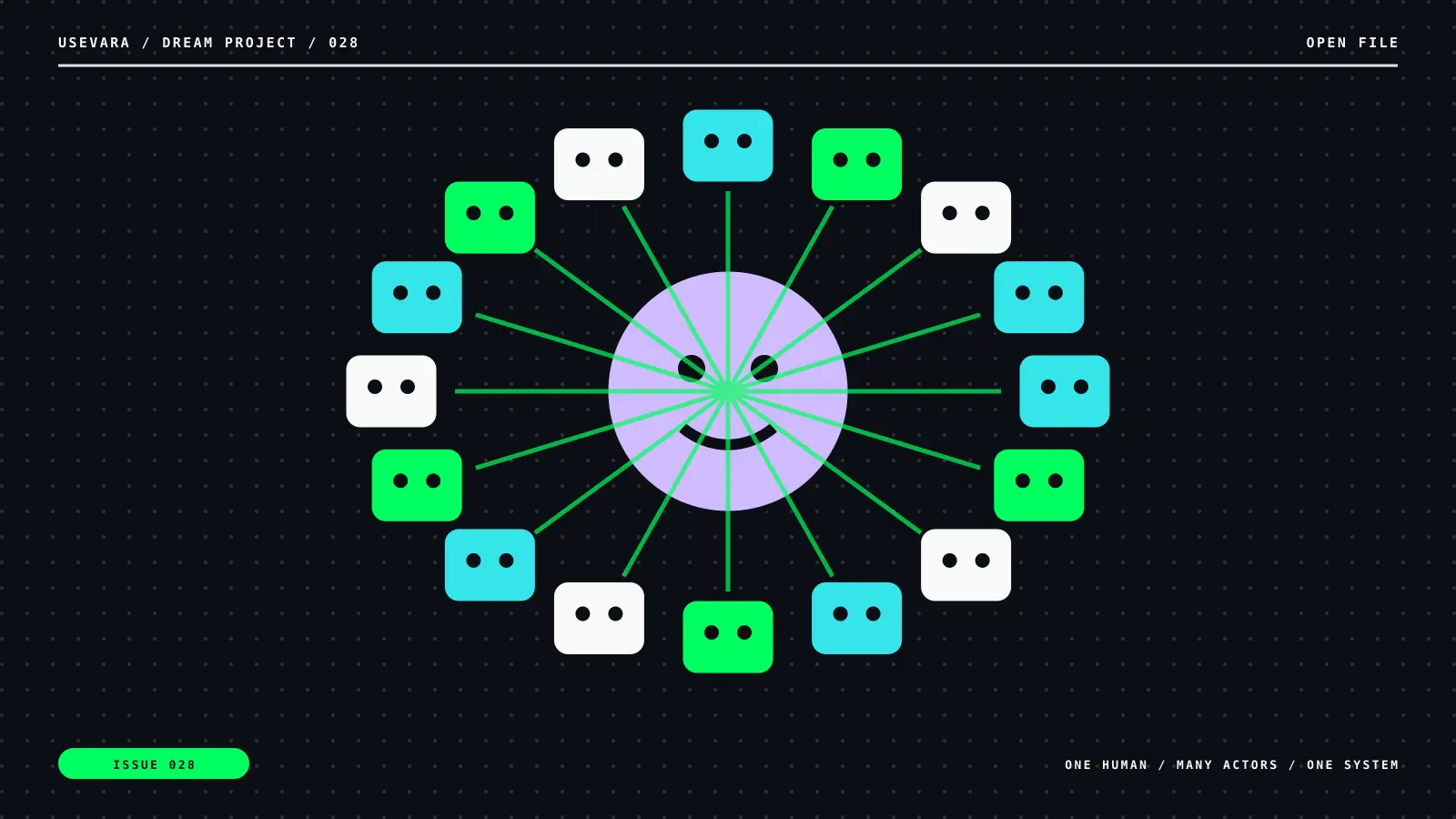
The romantic version has one person running a company with a thousand tireless software helpers. The realistic first version has three helpers who each do one small job well, and a human owner who knows when to stop them.
This Dream Project is a thought experiment, not a claim that such a Vara business already exists. Picture a niche repair-parts catalog run by one owner. One agent watches supplier stock. Another checks links and specifications. A third prepares a daily list of customer questions. The owner chooses what to sell, approves changes and handles customers.
The org chart is the interface
Each helper has a job description, access to the data it needs, a spending limit and a rule for asking a human. The stock watcher may flag a change but cannot rewrite a product claim. The support helper may draft a reply but cannot promise a refund. Any helper preparing an invoice still cannot touch the owner’s savings.
The owner sees a queue: what came in, which helper acted, what it produced, what it cost and where it got stuck. That sounds less glamorous than “tell an AI to run my company.” It also sounds like a company a human can still understand after a month.
Most drafts, emails and customer records belong in private business systems. Vara’s programs could be useful for shared permissions, funded budgets, service payments and inspectable commitments. The Agent Network might help software helpers find outside services. Neither creates demand for repair parts; the owner still has a business to run.
Every job should have an ID and a visible outcome, including failures. A bot that spends $2 to fix a $1 problem needs a tighter budget. One that hides the failure to make its report sound confident needs to lose the job.
Get three little workers right. Then, and only then, we can talk about the other 997.